Choose for the situation
How to proceed when no one offers ideas in a meeting
The whole-group question gets no response, or only the same people speak. First check whether people have time to think and a question they can answer.
Silence alone does not show that people have no interest or opinions. They may not know what to answer, how much they can say, or how their contribution will be treated. Set the question and participation conditions before choosing a method.
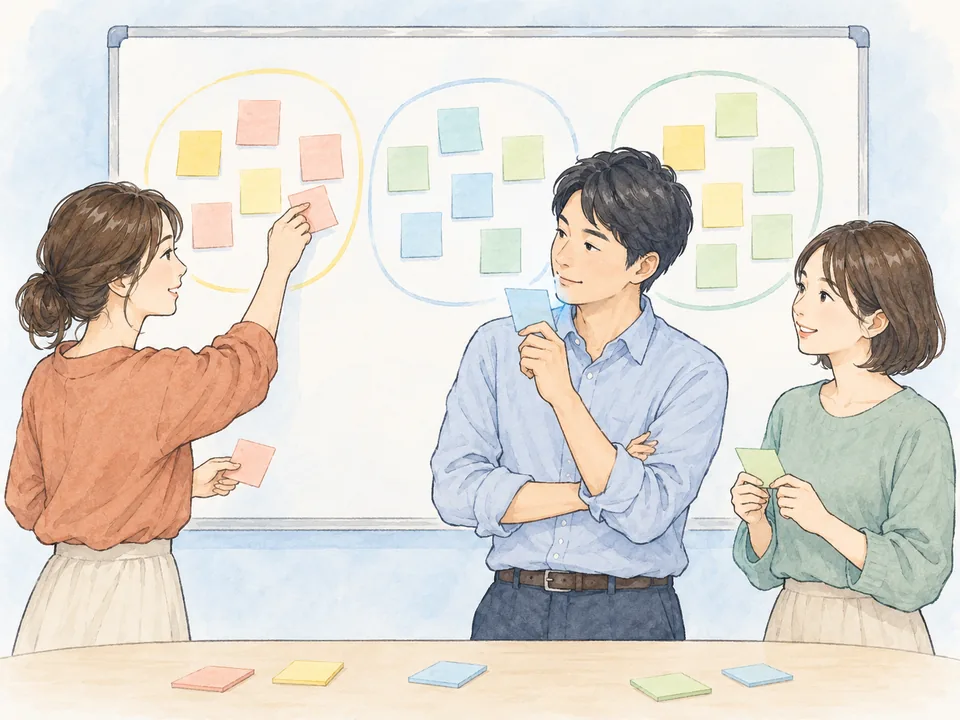
What to check first
- Is the question specific enough for participants to answer from their own experience?
- Can you allow time to think alone before speaking in the whole group?
- Can each person choose not to speak or write?
Choose a method that fits the session's conditions
These are not instructions to run both methods in sequence. Compare their conditions of use, then check the procedure for one candidate.
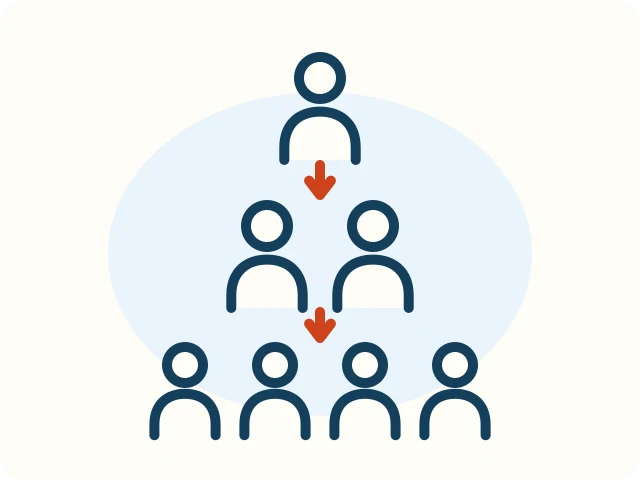
1-2-4-All
A participation method that starts with individual thinking, then expands the number of people in dialogue.
- When to choose it
- When you want people to think alone, deepen their ideas in pairs and small groups, and then share with everyone.
- Preparation cautions
- Use this instead of calling on everyone in turn from the start. Do not treat the number of contributions as the only outcome.
- What remains at the end
- Insights selected by each group, and issues to address together.
- When not to choose it
- When you want this method alone to deliver final agreement or approval.
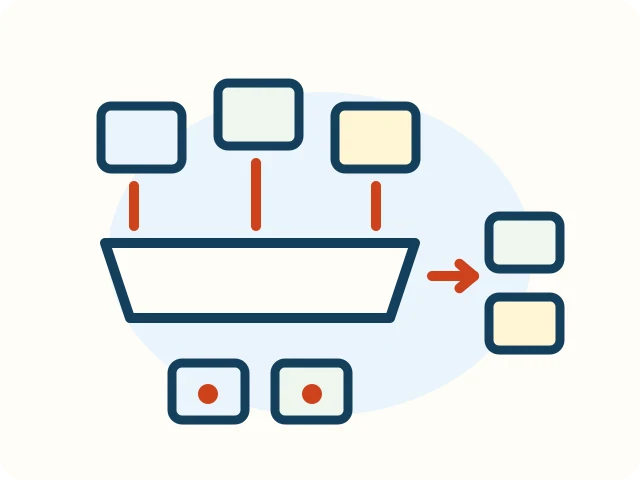
Silent Brainstorming / Brainwriting
Everyone writes ideas silently before speaking, makes them visible at the same time, then moves on to grouping and selection.
- When to choose it
- When early opinions tend to influence others, and you want to lay out everyone's ideas before anyone speaks.
- Preparation cautions
- Agree in advance on how people who find writing difficult can participate. Even anonymous contributions must not contain confidential information.
- What remains at the end
- A list of ideas, category names, and each group's leading ideas.
- When not to choose it
- When the purpose is to evaluate the people proposing ideas, or people believe anonymity permits them to write confidential information.
The sources and terms of use for each method's explanation and illustrations are given in the source section of the linked guide.
Sample programmes for combining methods
Diverge, Share, and Organize
12–20 people · 165 minutes, including buffer time
Japanese source status: Draft
When you want to plan one workshop that covers both generating and organising ideas.
Expand individual ideas, share them in a form everyone can see, and organise them to support the next decision.
Check the stages, materials, and responsibilitiesSample programmes are preparation references. Before running one, adjust the timing and roles to the participants and venue.
What to keep at the end
- One question for everyone to think about, and the scope that will not be covered this time.
- Ideas or questions to examine next, rather than a tally of contributions.
- Conditions that made participation difficult, and preparation to change for next time.
free session-planning sheet. Use it to record the purpose, responsibilities, and timing, and decide who will receive the session's records.
Language and implementation limits
- This English situation guide follows fixed source texts; it does not itself establish independent translation acceptance or approval to run a session.
- Method names and guide destinations use the explicit English registry where available. An untranslated dependency is labelled as a Japanese guide.
- Complete session-plan guides and starter guidance use English routes where implemented. The original downloadable session-planning files remain Japanese resources and are labelled by language.
- Japanese source status is editorial provenance only. It does not mean that this English guide has been reviewed or field-tested.
- Scene images are existing AI-generated illustrations, not records of actual events.